
AI Is Not Replacing Accountants, It Is Redefining the Profession
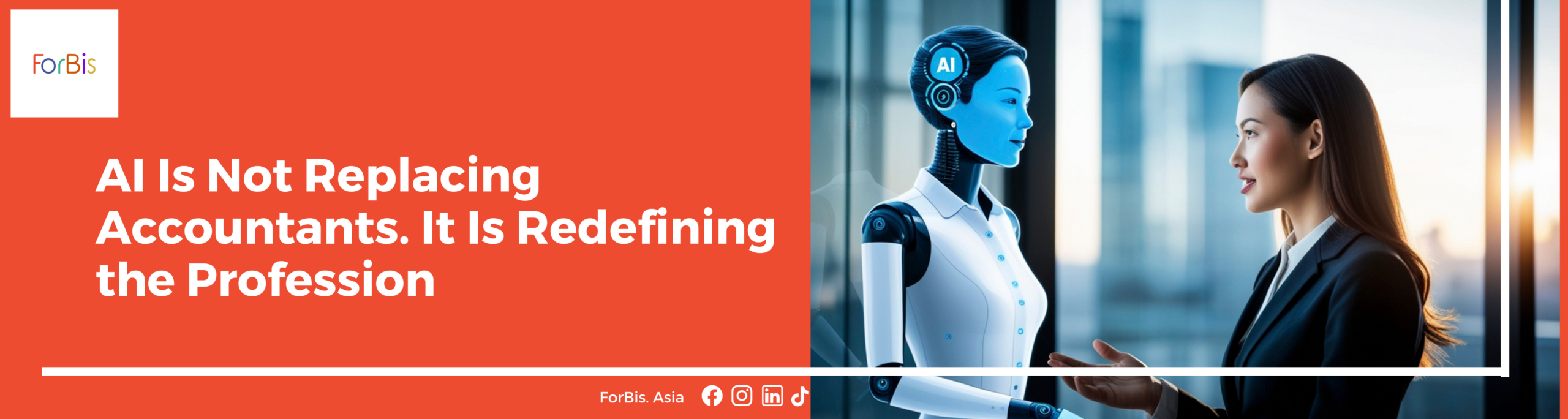
The rapid rise of artificial intelligence (AI) has sparked widespread concern across industries, and the accounting profession is no exception. As automation technologies become more advanced, many fear that traditional accounting roles may soon become obsolete. However, recent developments in Singapore suggest a different reality: AI is not replacing accountants, but rather transforming the nature of their work and elevating their role within businesses.
Insights from the Institute of Singapore Chartered Accountants (ISCA), alongside multiple industry reports, consistently highlight a clear and unified conclusion—AI is reshaping accounting jobs, not eliminating them.
One of the most significant changes driven by AI is the automation of routine and repetitive tasks. Traditionally, accountants have spent a considerable amount of time on activities such as data entry, transaction matching, and basic reconciliations. With the integration of AI tools, many of these processes can now be completed faster and with greater accuracy. As a result, accountants are no longer required to focus heavily on manual tasks that add limited strategic value.
Instead, AI enables professionals to shift their attention toward more complex and meaningful responsibilities. By reducing time spent on routine work, accountants can engage in deeper financial analysis, provide strategic business insights, and support decision-making processes. This transition marks a fundamental shift in the profession—from “number crunchers” to strategic advisors.
Importantly, despite the growing presence of AI, there is no clear evidence of widespread job displacement within the accounting sector. Data from Singapore shows strong employment outcomes for accounting graduates, with near-full employment rates and increasing enrolment in accounting programs. These trends indicate that demand for accounting professionals remains stable, even as the nature of the work evolves.
This reinforces a key point: AI is not eliminating the need for accountants. Instead, it is changing what employers expect from them. Digital readiness has become a fundamental requirement in today’s accounting landscape. Skills such as data management, technological literacy, and the ability to work alongside AI systems are no longer optional—they are essential.
Employers are increasingly prioritizing candidates who are comfortable using digital tools and can interpret data effectively. The modern accountant is expected to understand not only financial principles but also how technology can enhance business performance. This shift applies to both new graduates and experienced professionals, highlighting the need for continuous learning and adaptation.
Recognizing this transformation, Singapore has taken proactive steps to prepare its workforce for an AI-driven future. Under the broader direction of Singapore Budget 2026, significant emphasis has been placed on AI adoption and workforce upskilling. Initiatives such as the AI Fluency Programme aim to equip accounting professionals with practical knowledge on how to apply AI in real-world scenarios, understand its limitations, and use it responsibly.
These efforts reflect a broader understanding that the future of accounting lies in the collaboration between human expertise and technological capability. While AI can process vast amounts of data and identify patterns, it cannot replace human judgment, ethical reasoning, or professional skepticism. Accountants continue to play a critical role in interpreting information, ensuring compliance, and making informed decisions that align with business objectives.
Another important aspect of this transformation is the evolving role of accountants within organizations. As AI takes over operational tasks, accountants are increasingly positioned as strategic partners to businesses. They are expected to contribute to risk management, guide investment decisions, and provide insights that drive long-term growth. This elevated role not only enhances the value of the profession but also opens up new career opportunities.
At the same time, it is important to acknowledge the concerns within the industry. Surveys indicate that many professionals remain worried about potential job displacement due to AI. While these concerns are valid, the current evidence suggests that the impact of AI is more nuanced. Rather than reducing the workforce, AI is reshaping job scopes and creating a demand for higher-level skills.
Ultimately, the transformation of accounting through AI should be viewed as an opportunity rather than a threat. Professionals who embrace technology and invest in developing new competencies will be better positioned to thrive in this changing environment. The key lies in adaptability—those who can integrate financial expertise with technological understanding will remain highly valuable in the job market.
In conclusion, the narrative that “AI will replace accountants” is largely misleading. A more accurate statement is that AI is replacing certain tasks, not the profession itself. As demonstrated by developments in Singapore, the future of accounting is not about elimination, but evolution. The role of accountants is becoming more strategic, more analytical, and more impactful than ever before.
Sumber:
- https://www.thepeakmagazine.com.sg/influence/budget-2026-proves-ai-wont-replace-accountants-says-isca?utm_source=chatgpt.com
- https://www.straitstimes.com/business/ai-will-reshape-accounting-but-jobs-in-spore-remain-safe-for-now-chartered-accountants-body?utm_source=chatgpt.com
- https://www.thestar.com.my/business/business-news/2026/02/23/ai-poised-to-reshape-accounting?utm_source=chatgpt.com#goog_rewarded